Showing posts with label curiosity. Show all posts

Sunday, September 15, 2024

Quantum Musketeers: The Quest for Cognitive Physics

 The following story drifts somewhere between sarcasm and curiosity, touching on the idea that our minds might be governed by quantum laws. Yes, those quantum laws. You know, the ones with Schrödinger's cat, uncertainty, and all that jazz. But as much as I want to laugh it off, part of me hesitates. Could there be truth in these bold claims? Is it possible that 50 years from now, we'll be awarding Nobel Prizes for discoveries that our brains are quantum computers, firing love and hate through Schrödinger's equation?

I might be skeptical, but let's dive into this paradoxical rabbit hole of thought with our valiant quantum musketeers.


Meet the Musketeers

Almost everyone has heard of the classic musketeers from Dumas' world, but have you heard of their quantum counterparts? Enter the Quantum Musketeers, a group of researchers who dared to ask: "What if mental phenomena are quantum-like?" Six fearless scientists initially embarked on this mind-bending journey, soon to be joined by a mysterious seventh.

But before we dive into the science, let’s recall the type of trivialities that triggered swordfights for our classical musketeers:

"Why are you fighting?"
"Faith! I don't very well know."
"I’m fighting because… well, I’m fighting!"

At least Dumas' musketeers had a reason (albeit vague) for crossing swords. Our quantum musketeers? They're fighting the unseen, the intangible. Forget waving swords—these warriors are dealing with halos of uncertainty, fluctuating in and out of existence. 


Their minds are neither particles nor waves but something in between. Quantum superpositions, perhaps?

And now, the modern heroes:

  1. Elio Conte
  2. Antonio Federici
  3. Francesco Vitiello
  4. Orlando Todarello
  5. Michele Lopane
  6. Andrei Khrennikov
    And the wildcard:
  7. Joseph P. Zbilut

Together, they’ve crafted papers with titles like "Preliminar Evidence of Quantum-Like Behavior in Measurements of Mental States" and "Remarks on Quantum Behavior of Cognitive Entities." Clearly, they’re not messing around.


Quantum Leaps of the Mind

What, you ask, have our brave musketeers accomplished? According to their Introduction, mental states don't fit neatly into our traditional physical reality. They argue that we need extra dimensions—mental coordinates, if you will—to capture the complexity of consciousness. Sounds pretty groundbreaking, right? Well, as they put it:

"Mental phenomena cannot be completely embedded into physical space."

Wait… extra dimensions? I can barely manage three, and now you’re telling me there are more? In fact, B. Hiley (a sidekick of David Bohm, quantum legend) theorizes that consciousness might exist in something called PRESPACE. Oh sure, PRESPACE. It's right next to that place where I left my car keys and my sense of direction.


Schrödinger’s Brain?

The six musketeers go on to suggest that thinking itself might resemble quantum mechanics. They propose that when we make decisions, our minds behave like quantum particles, collapsing from one potential state to another. In short, every decision you make is a quantum leap in your head. Just imagine: You’re deciding between pizza and salad, and somewhere in PRESPACE, a wave function collapses.

"The act of conscious thinking is itself the same as the collapse resolving out potential alternatives."

A tantalizing thought, isn’t it? Maybe that time I accidentally bought a pineapple pizza instead of pepperoni was the fault of quantum interference.


Quantum Spin or Spin Doctoring?

Our fearless heroes even dared to experiment. They devised tests to examine how people perceive shapes, borrowing ideas from Gestalt psychology. We all know this joke:


Imagine staring at two images: one group sees picture A, the other sees picture B, and depending on which background you focus on, your mind flips back and forth. What does this have to do with quantum physics? They claim that our minds exhibit “quantum interference” in how we perceive and interpret information.


At this point, the authors were this close to preparing a Schrödinger-like equation for cognitive states. And yet, a small caveat emerged: quantum micro-descriptions might not scale perfectly to the human brain. The differences in temperature, time, and scale are just too vast. But fear not! They propose that mental states still behave in a context-dependent, quantum-like manner.

In summary, they claimed:

"Mental states behave in a context-dependent, quantum-like manner, indicating that mental phenomena cannot be completely encompassed within the framework of traditional physical space."


Quantum Philosophy: The Final Thought

So, there you have it: mental phenomena, Schrödinger-style. Whether our brave musketeers are on the verge of unlocking the mysteries of the mind or simply wielding the sword of over-enthusiastic theory, only time will tell. Could they be heralds of a new era of cognitive science, one where quantum equations describe love, war, and pizza choices? Perhaps.

Or maybe, just maybe, this quantum interpretation of thought is as elusive as PRESPACE itself. For now, I'm left with one lingering question: If consciousness exists in extra dimensions, does that mean my existential crises are bigger than I thought?

Conclusion:

Quantumly speaking...

In the end, it’s a balancing act—somewhere between skepticism and curiosity, quantum fuzziness and clarity. Our Quantum Musketeers have taken up arms in a battle where the enemy is not only invisible but exists in multiple states simultaneously. Whether they’re on the path to a Nobel Prize or just tilting at windmills, they’ve certainly given us something to ponder. Or at least, to laugh about—quantumly speaking.

Friday, April 7, 2023

William Crookes and the Paranormal: True Science

William Crookes himself, on the other hand (cf. the previous note: No True Science Allowed! A Priori Assumptions Prevail), described his experiments in as much detail as he possibly could, in a series of papers, and also in his book “The Phenomena of Spiritualism”. In particular, in a number of experiments, Crookes researched the phenomenon known today under the name of “telekinesis”. 


A “gifted medium”, Mr. Daniel Dunglas Home, exerted some kind of a force that could not be explained by the known laws of physics. One of the arrangements of the experiment is represented in Fig. 3 – taken from Crookes’ book, p. 15 


What the spring balance measured, and what was recorded, could not be explained by the established laws of physics.

Curiosity Debunks the Debunker

What was the response of the scientific community? As Crookes remarks in his paper “Some further research on psychic force”, published in the “Quarterly Journal of Science”, October 1871, a leading scientific engineer of the United States, Mr. Coleman Sellers, objected that the mahogany board used by Crookes, given its dimensions, could not possibly have the weight of 6 lb, given by Crookes. It should have the weight of 13.3 pounds!

East African Mahogany (Khaya anthotheca)
It is a large evergreen tree up to 60m tall with an elongated or rounded, much-branched crown. Diameter between 60-120cm.

Well, hold on a minute! This declaration made with such certainty incited my curiosity and so I checked the material properties of mahogany wood given in the tables that are available on the internet, and I came to the conclusion that it could.


The dimensions given by Crooks were 36x8.5x1 inches. This gives us the volume of 342 cubic inches. One foot has 12 inches; therefore we are dealing with about 0.2 cubic feet. According to a wood densities table that can be found on the internet, African mahogany wood has the density 30-53 lb/ft3, which, assuming that Crookes’ board was really dry, gives the weight of 6 pounds!

Certainly, the scientific engineer, Mr. Coleman Sellers, could have figured that out himself even without tables of properties available on the internet today. One suspects that he took a board of the correct dimensions, soaked it for a long time in water, and then weighed it so as to be “telling the truth” in his critique. That is how a lot of science is done, by the way.

The Apathy of Science

Anton Chekhov

Crookes commented on the reluctance and apathy of the scientific community regarding these truly astonishing effects:

I confess I am surprised and pained at the timidity or apathy shown by scientific men in reference to this subject. Some little time ago, when an opportunity for examination was first presented to me, I invited the co-operation of some scientific friends in a systematic investigation; but I soon found that to obtain a scientific committee for the investigation of this class of facts was out of the question, and that I must be content to rely on my own endeavours, aided by the co-operation of a few scientific and learned friends who were willing to join in the inquiry.

As noted already, at the beginning, when Crookes announced his plans, the reaction was, as a rule, positive: “if men like Mr. Crookes grapple with the subject, taking nothing for granted until it is proved, we shall soon know how much to believe.”

Yet, as Crookes noted in his second paper:

These, however, were written too hastily. It was taken for granted by the writers that these results of my experiments would be in accordance with their preconceptions. What they really desired was not the truth, but an additional witness in favour of their own foregone conclusions. When they found that the facts which that investigation established could not be made to fit their opinions, why, - ‘so much the worse for the facts.(Italics, mine.)

It was not therefore a surprise when these reactions changed to “The thing is too absurd to be treated seriously.” “It is impossible, and therefore can’t be true.”

The Attack of Science on Curiosity


Crookes also anticipated the attacks from those who are not curious because they know it all in advance. They know what is possible and what is impossible, and they are not in any need in need of experiments to verify what they are convinced about – like Michael Faraday mentioned above. Crookes analyzed the problem succinctly:

Many of the objections made to my former experiments are answered by the series about to be related. Most of the criticisms to which I have been subjected have been perfectly fair and courteous, and these I shall endeavor to meet in the fullest possible manner. Some critics, however, have fallen into the error of regarding me as an advocate for certain opinions, which they choose to ascribe to me, though in truth my single purpose has been to state fairly and to offer no opinion.

And:

Many people will say, ‘What is the use of seeking? You will find nothing. Such things are God’s secrets, which He keeps for Himself.’ There always have been people who liked ignorance better than knowledge. (…)

Other people may object that these chapters on the occult sciences are making our knowledge retrograde into the Middle Ages, instead of advancing towards the bright light of the future, foreshadowed by modern progress.

His reply to the last criticism makes an important point:

Well, then! I say that a careful study of these facts can no more transport us back to the days of sorcery, than the study of astronomy can lead us back to the times of astrology. (…)

Further on, Crookes asked:

Had the time really come? Was the way fully prepared? Was the fruit ripe? One can but begin, of course. Future ages will develop the seed.


I think we live in the “Future ages” and
nothing has changed in the attitude of those who are not curious, those who are narrow-minded, and those who cannot live without being subservient to some authority, be it religion, be it “the mainstream science”, or both. Those people - sometimes they are scientists, sometimes administrators, and sometimes magicians - try to kill any curiosity, any research that dares to go beyond the boundaries of that which they declare to be “rational” – a totally irrational attitude, I would say.


P.S.1. 08-04-23 16:22 Seventies - These were Good Old Times

Try once more like you did beforeSing a new song, Chiquitita

P.S.2. 09-04-23 11:54 Noted this passage while reading McGilchrist - "The Matter With Things", chapter "SOME POTENTIAL CAUSES OF CONFUSION":

"However, we live in a society where talking about life is as much our defining quality as living it. And when it comes to articulating a philosophy, or a working model by which to understand our society and the wider world, that wisdom suddenly disappears in the mind of the  public  spokesman,  politician  or  scientist  in  the  need  not  to appear  foolish.  We  become  unnaturally  self-scrutinising,  and  self-consistency suddenly becomes of prime importance. Regrettably we would  rather  speak  falsely,  if  doing  so  means  we  do  not  seem  to contradict ourselves: we realise that it is much simpler for our point of view to be dismissed as self-contradictory than untrue. Given this cast of mind, it is easy to see how one might easily argue one’s way into believing something which one knows perfectly well at a deeper  desire  to appear consistent to some – rather too simple – position." (bold - mine)

Wednesday, April 5, 2023

No True Science Allowed! A Priori Assumptions Prevail

 But, let us go back to the scientific curiosity of William Crookes. In the beginning, Crookes’ plans to conduct truly scientific experiments with respect to “spiritualist” phenomena were welcomed by the learned community. The attacks came only later, when the results of his experiments did not confirm their a priori assumptions.

Crookes published his second paper on this subject in the October 1871 issue of the same journal1. There he presented clearly his motivations and the philosophy behind his research. He started with stressing the role of Science, and he did it in an eloquent and, for me, really beautiful way:

Science alone makes steady progress in the present history of mankind. It is science which has transformed the world, though we rarely render her the justice and the gratitude that are her due. It is through her that we live intellectually, and even materially, at the present day. She alone can guide us and enlighten us.

The Strange Case of the Disappearing Camille Flammarion

The motivations behind the work done by William Crookes and other curious researchers were described in the book “The Unknown” by a famous Frenchman, Camille Flammarion. That leads to the question: Who was Camille Flammarion?

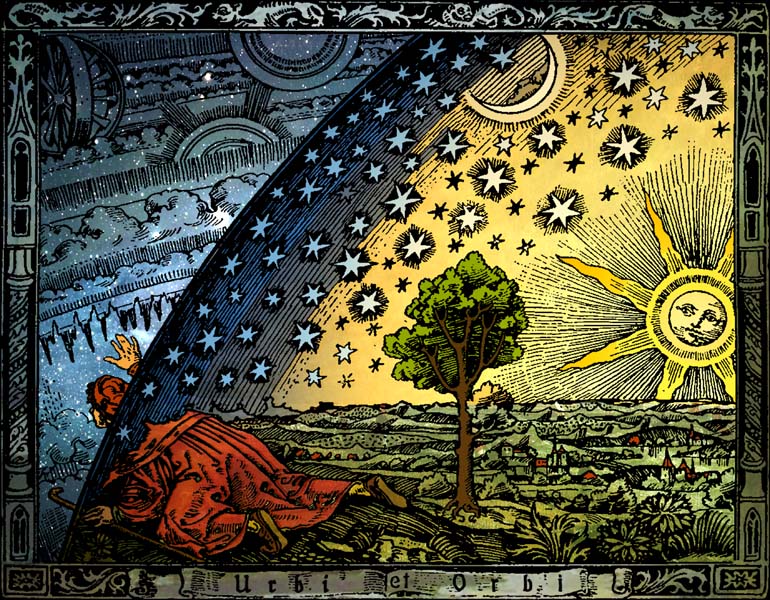
Universum, C. Flammarion, gravure sur bois, Paris 1888


Charles Richet, who in 1913 won the Nobel Prize for physiology and medicine, wrote the eulogy for Camille Flammarion in 1925, opening with these words:

“Nous venons de subir une perte cruelle.

Voici que disparaît, en pleine puissance intellectuelle malgré son grand âge, notre héroïque ami Camille Flammarion.

Il fut un grand savant. Il fut un noble poète. Il fut un ardent ami de l'humanité et de la paix. Il fut aussi un des fidèles de notre sainte cause, et, comme il avait le culte de la vérité, les problèmes qui nous occupent ici ont animé ses dernières années.” "We have just suffered a cruel loss.


Our heroic friend Camille Flammarion, in full intellectual strength despite his great age, has passed away.


He was a great scholar. He was a noble poet. He was an ardent friend of humanity and peace. He was also one of the faithful of our holy cause, and, as he had the cult of truth, the problems which occupy us here animated his last years."


Shockingly, French Encyclopedia Universalis ignores this famous French personality completely; fortunately, the website of ObservatoryMeudon gives us the relevant details:

Nicolas Camille Flammarion was born in 1842 at Montigny-le-Roi in the department of Haute Marne, France. He first studied theology, but early became interested in astronomy. At age 16, in 1858, he wrote a 500-page manuscript, Cosmologie Universelle, and became an assistant of LeVerrier (the man whose calculations had led to the discovery of Neptune) at Paris Observatory. From 1862 to 1867, he temporarily worked at the Bureau of Longitudes, then returning to the Observatory where he became involved in the program of double star observing. This project resulted in publishing a catalog of 10,000 double stars in 1878.

Flammarion was honored by the naming of a Moon Crater (3.4S, 3.7W, 74.0 km diameter, in 1935) and a Mars Crater (25.4N, 311.8W, 173.0 km, in 1973). Asteroid (1021) Flammarion was discovered by Max Wolf on March 11 …


In his book “The Unknown” Flammarion writes with true passion about the research of William Crookes and others:

This work is an attempt to analyze scientifically subjects commonly held to have no connection with science, which are even accounted uncertain, fabulous, and more or less imaginary.

I am about to demonstrate that such facts exist. I am about to attempt to apply the same scientific methods employed in other sciences to the observation, verification, and analysis of phenomena commonly thrown aside as belonging to the land of dreams, the domain of the marvelous or the supernatural, and to establish that they are produced by forces still unknown to us, which belong to an invisible and natural world, different from the one we know through our own senses.

Is this attempt rational? Is it logical? Can it lead to results? I do not know. But I do know that it is interesting.

“I do know that it is interesting.” The hallmark of a true scientific mind!

There is No Science Without Curiosity

William Crookes started his scientific investigations of phenomena that were - up to that point – considered to be outside the domain of science, simply because he saw that they were “interesting” and they incited his curiosity. There is no science without curiosity – I think one should always keep this in mind.

Frederick Engels and Dialectical Smearing

What kind of experiments was Sir William Crookes performing, and what was the reaction of the scientific community to these experiments and to their results? Before I answer these questions let me tell you about the reaction of one distinguished philosopher of this time, namely one Frederick Engels. In his “Dialectics of Nature” Engels had a whole chapter devoted to the subject of “Natural Science and the Spirit World”. The dialectic method is used there with the obvious purpose of smearing Crookes’ reputation with comments that have nothing to do with the experiment itself, probably with the hope that the reader would be warned off from actually checking the sources – the scientific publications of William Crookes himself. Obviously, this tactic works only on those who have no natural curiosity. Thus writes Engels:

The second eminent adept2 among English natural scientists is Mr. William Crookes, the discoverer of the chemical element thallium and of the radiometer (in Germany also called "Lichtmühle" [light-mill] ). Mr. Crookes began to investigate spiritualistic manifestations about 1871, and employed for this purpose a number of physical and mechanical appliances, spring balances, electric batteries, etc. Whether he brought to his task the main apparatus required, a sceptically critical mind, or whether he remained to the end in a fit state for working, we shall see.

In fact, this “we shall see” was completely misleading, because Engels did not discuss any details of the experiments; his intent was purely and simply to defame. Again we must ask the question: is lack of curiosity and lack of character co-related?


1Available from archive.org

2Notice how he uses the word “adept” right in the first sentence in order to create an initial influence in the mind of the reader. Just how this sort of “priming” works is studied extensively in modern cognitive science. 


See Timothy Wilson: “Strangers to Ourselves.”


Next post:  

William Crookes and the Paranormal: True Science

Thursday, March 23, 2023

Curiosity, intellectual freedom and Science

 Curiosity killed the cat? Perhaps, but lack of curiosity or insufficient curiosity kills Science.


Curiosity in one’s work is incessantly asking questions about “How?” and “Why?”. 


Of course children are doing this all the time, but usually they address these questions to adults, and when they try to answer these questions by themselves, they can be in danger because they do not yet have adequate knowledge and experience to fully appreciate the answers. Scientists usually have both knowledge and experience, but their curiosity may have diminished, sometimes completely. Without curiosity Science dies. 


Scientists who are not curious about the Unknown and the Unexplained infect Science with a dangerous disease. In principle this fact is well known. For instance, in the opening section of a 2007 report of the European Research Council entitled “What Makes Scientists Creative? we could read these words:

Humans are curious by nature and have been seeking knowledge about the universe, our natural environment, our past and future since ancient times. Scientists exhibit a heightened level of curiosity. They go further and deeper into basic questions showing a passion for knowledge for its own sake.

Curiosity is the driving force of basic, or pure, science. The desire to go beyond the established frontiers of knowledge, to explore the boundaries of discipline and to resolve unanswered questions, is motivated essentially by human inquisitiveness. (Italics, mine.)

But it is one thing is to know certain truth “in principle”, and quite another is to notice the cases in which the principle should be applied, but is not.

Curiosity is Not Enough: Freedom is Essential

Lack of curiosity, intellectual indifference and laziness – they all kill Science. But even when curiosity is present, Science will not grow as it could – and should - without total intellectual freedom.

Freedom is essential


Bertrand Russell, was well aware of the dangers for Science coming not only through the political use of Science, but also from within Science itself. He warned us:

Those to whom intellectual freedom is personally important may be a minority in the community, but among them are the men of most importance to the future. We have seen the importance of Copernicus, Galileo, and Darwin in the history of mankind, and it is not to be supposed that the future will produce no more such men. If they are prevented from doing their work and having their due effect, the human race will stagnate, and a new Dark Age will succeed, as the earlier Dark Age succeeded the brilliant period of antiquity. New truth is often uncomfortable, especially to the holders of power; nevertheless, amid the long record of cruelty and bigotry, it is the most important achievement of our intelligent but wayward species. (Italics, mine.)

New truth is, indeed, often uncomfortable and the history of Science tells how scientists who were asking questions “why?” and “how” have been treated. Learning about how such processes took place in the past enables us to be more sensitive to very same things happening now, all around us. The battle of the Titans still takes place between Science and religion, but it also can be seen within Science itself.


P.S.1. Out of curiosity I have recently watched the 1987 movie "Fatal attraction". 

Michael Douglas portrays Daniel "Dan" Gallagher

The movie shows how uncontrolled curiosity and losing your scientifically objective moral compass can lead to disasters almost as bad as nuclear war.

Biolocation

  On Tuesday, December 23, Vlad Zhigalov (see e.g. here ) had a talk at the " Temporology " seminar hosted at Omsk.  He spoke abo...