In 1986 an article appeared in the Proceedings of IEEE (Institute of Electrical and Electronics Engineers) with the title “Parapsychological Research: A Tutorial Review and Critical Approach”. I have no idea why CIA classified this (public) document? Perhaps for this reason:
Showing posts with label william crookes. Show all posts
Showing posts with label william crookes. Show all posts
Monday, April 10, 2023

Friday, April 7, 2023
William Crookes and the Paranormal: True Science
William Crookes himself, on the other hand (cf. the previous note: No True Science Allowed! A Priori Assumptions Prevail), described his experiments in as much detail as he possibly could, in a series of papers, and also in his book “The Phenomena of Spiritualism”. In particular, in a number of experiments, Crookes researched the phenomenon known today under the name of “telekinesis”.

A “gifted
medium”, Mr. Daniel Dunglas Home, exerted some kind of a force that
could not be explained by the known laws of physics. One of the
arrangements of the experiment is represented in Fig. 3 – taken
from Crookes’ book, p. 15

What the spring balance measured, and what was recorded, could not be explained by the established laws of physics.
Curiosity Debunks the Debunker
What was the response of the scientific community? As Crookes remarks in his paper “Some further research on psychic force”, published in the “Quarterly Journal of Science”, October 1871, a leading scientific engineer of the United States, Mr. Coleman Sellers, objected that the mahogany board used by Crookes, given its dimensions, could not possibly have the weight of 6 lb, given by Crookes. It should have the weight of 13.3 pounds!

East African Mahogany (Khaya anthotheca)
It is a large evergreen tree up to 60m tall with an elongated or rounded, much-branched crown. Diameter between 60-120cm.
It is a large evergreen tree up to 60m tall with an elongated or rounded, much-branched crown. Diameter between 60-120cm.
Well, hold on a minute! This declaration made with such certainty incited my curiosity and so I checked the material properties of mahogany wood given in the tables that are available on the internet, and I came to the conclusion that it could.

The dimensions given by Crooks were 36x8.5x1 inches. This gives us the volume of 342 cubic inches. One foot has 12 inches; therefore we are dealing with about 0.2 cubic feet. According to a wood densities table that can be found on the internet, African mahogany wood has the density 30-53 lb/ft3, which, assuming that Crookes’ board was really dry, gives the weight of 6 pounds!
Certainly, the scientific engineer, Mr. Coleman Sellers, could have figured that out himself even without tables of properties available on the internet today. One suspects that he took a board of the correct dimensions, soaked it for a long time in water, and then weighed it so as to be “telling the truth” in his critique. That is how a lot of science is done, by the way.
The Apathy of Science

Anton Chekhov
Crookes commented on the reluctance and apathy of the scientific community regarding these truly astonishing effects:
I confess I am surprised and pained at the timidity or apathy shown by scientific men in reference to this subject. Some little time ago, when an opportunity for examination was first presented to me, I invited the co-operation of some scientific friends in a systematic investigation; but I soon found that to obtain a scientific committee for the investigation of this class of facts was out of the question, and that I must be content to rely on my own endeavours, aided by the co-operation of a few scientific and learned friends who were willing to join in the inquiry.
As noted already, at the beginning, when Crookes announced his plans, the reaction was, as a rule, positive: “if men like Mr. Crookes grapple with the subject, taking nothing for granted until it is proved, we shall soon know how much to believe.”
Yet, as Crookes noted in his second paper:
These, however, were written too hastily. It was taken for granted by the writers that these results of my experiments would be in accordance with their preconceptions. What they really desired was not the truth, but an additional witness in favour of their own foregone conclusions. When they found that the facts which that investigation established could not be made to fit their opinions, why, - ‘so much the worse for the facts.(Italics, mine.)
It was not therefore a surprise when these reactions changed to “The thing is too absurd to be treated seriously.” “It is impossible, and therefore can’t be true.”
The Attack of Science on Curiosity
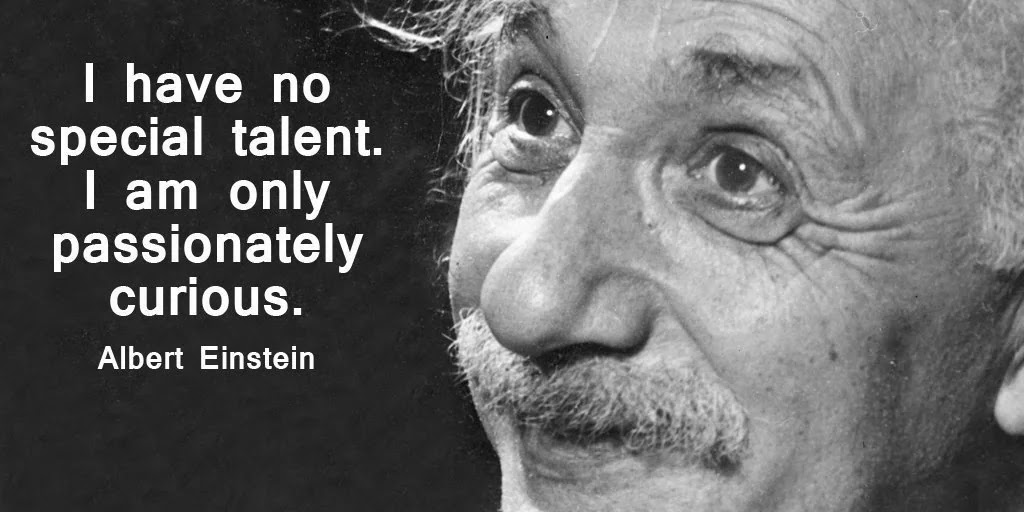
Crookes also anticipated the attacks from those who are not curious because they know it all in advance. They know what is possible and what is impossible, and they are not in any need in need of experiments to verify what they are convinced about – like Michael Faraday mentioned above. Crookes analyzed the problem succinctly:
Many of the objections made to my former experiments are answered by the series about to be related. Most of the criticisms to which I have been subjected have been perfectly fair and courteous, and these I shall endeavor to meet in the fullest possible manner. Some critics, however, have fallen into the error of regarding me as an advocate for certain opinions, which they choose to ascribe to me, though in truth my single purpose has been to state fairly and to offer no opinion.
And:
Many people will say, ‘What is the use of seeking? You will find nothing. Such things are God’s secrets, which He keeps for Himself.’ There always have been people who liked ignorance better than knowledge. (…)
Other people may object that these chapters on the occult sciences are making our knowledge retrograde into the Middle Ages, instead of advancing towards the bright light of the future, foreshadowed by modern progress.
His reply to the last criticism makes an important point:
Well, then! I say that a careful study of these facts can no more transport us back to the days of sorcery, than the study of astronomy can lead us back to the times of astrology. (…)
Further on, Crookes asked:
Had the time really come? Was the way fully prepared? Was the fruit ripe? One can but begin, of course. Future ages will develop the seed.

I think we live in the “Future ages” and nothing has changed in the attitude of those who are not curious, those who are narrow-minded, and those who cannot live without being subservient to some authority, be it religion, be it “the mainstream science”, or both. Those people - sometimes they are scientists, sometimes administrators, and sometimes magicians - try to kill any curiosity, any research that dares to go beyond the boundaries of that which they declare to be “rational” – a totally irrational attitude, I would say.
P.S.1. 08-04-23 16:22 Seventies - These were Good Old Times
Try once more like you did beforeSing a new song, Chiquitita
P.S.2. 09-04-23 11:54 Noted this passage while reading McGilchrist - "The Matter With Things", chapter "SOME POTENTIAL CAUSES OF CONFUSION":
"However, we live in a society where talking about life is as much our defining quality as living it. And when it comes to articulating a philosophy, or a working model by which to understand our society and the wider world, that wisdom suddenly disappears in the mind of the public spokesman, politician or scientist in the need not to appear foolish. We become unnaturally self-scrutinising, and self-consistency suddenly becomes of prime importance. Regrettably we would rather speak falsely, if doing so means we do not seem to contradict ourselves: we realise that it is much simpler for our point of view to be dismissed as self-contradictory than untrue. Given this cast of mind, it is easy to see how one might easily argue one’s way into believing something which one knows perfectly well at a deeper desire to appear consistent to some – rather too simple – position." (bold - mine)
Wednesday, April 5, 2023
No True Science Allowed! A Priori Assumptions Prevail
But, let us go back to the scientific curiosity of William Crookes. In the beginning, Crookes’ plans to conduct truly scientific experiments with respect to “spiritualist” phenomena were welcomed by the learned community. The attacks came only later, when the results of his experiments did not confirm their a priori assumptions.
Crookes published his second paper on this subject in the October 1871 issue of the same journal1. There he presented clearly his motivations and the philosophy behind his research. He started with stressing the role of Science, and he did it in an eloquent and, for me, really beautiful way:
Science alone makes steady progress in the present history of mankind. It is science which has transformed the world, though we rarely render her the justice and the gratitude that are her due. It is through her that we live intellectually, and even materially, at the present day. She alone can guide us and enlighten us.
The Strange Case of the Disappearing Camille Flammarion
The motivations behind the work done by William Crookes and other curious researchers were described in the book “The Unknown” by a famous Frenchman, Camille Flammarion. That leads to the question: Who was Camille Flammarion?
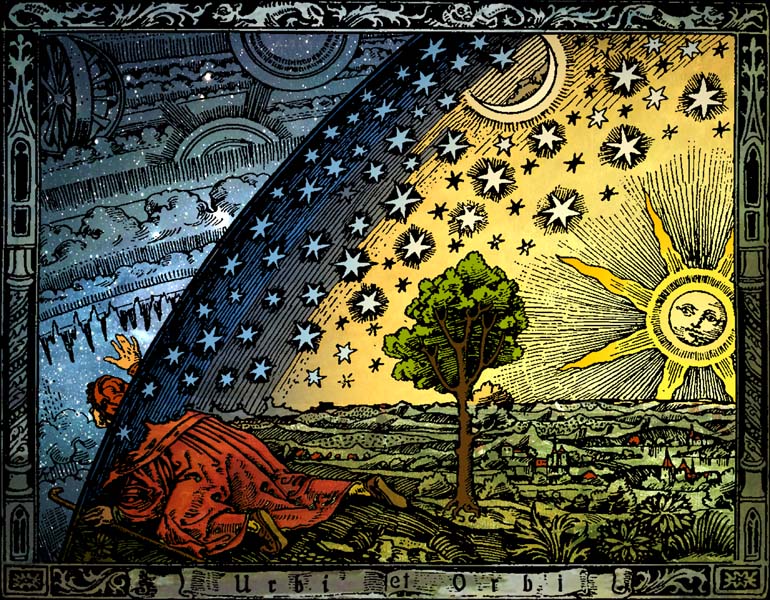
Universum, C. Flammarion, gravure sur bois, Paris 1888
Charles Richet, who in 1913 won the Nobel Prize for physiology and medicine, wrote the eulogy for Camille Flammarion in 1925, opening with these words:
“Nous venons de subir une perte cruelle.
Voici que disparaît, en pleine puissance intellectuelle malgré son grand âge, notre héroïque ami Camille Flammarion.
Il fut un grand savant. Il fut un noble poète. Il fut un ardent ami de l'humanité et de la paix. Il fut aussi un des fidèles de notre sainte cause, et, comme il avait le culte de la vérité, les problèmes qui nous occupent ici ont animé ses dernières années.” "We have just suffered a cruel loss.
Our heroic friend Camille Flammarion, in full intellectual strength despite his great age, has passed away.
He was a great scholar. He was a noble poet. He was an ardent friend of humanity and peace. He was also one of the faithful of our holy cause, and, as he had the cult of truth, the problems which occupy us here animated his last years."

Shockingly, French Encyclopedia Universalis ignores this famous French personality completely; fortunately, the website of ObservatoryMeudon gives us the relevant details:
Nicolas Camille Flammarion was born in 1842 at Montigny-le-Roi in the department of Haute Marne, France. He first studied theology, but early became interested in astronomy. At age 16, in 1858, he wrote a 500-page manuscript, Cosmologie Universelle, and became an assistant of LeVerrier (the man whose calculations had led to the discovery of Neptune) at Paris Observatory. From 1862 to 1867, he temporarily worked at the Bureau of Longitudes, then returning to the Observatory where he became involved in the program of double star observing. This project resulted in publishing a catalog of 10,000 double stars in 1878.
Flammarion was honored by the naming of a Moon Crater (3.4S, 3.7W, 74.0 km diameter, in 1935) and a Mars Crater (25.4N, 311.8W, 173.0 km, in 1973). Asteroid (1021) Flammarion was discovered by Max Wolf on March 11 …

In his book “The Unknown” Flammarion writes with true passion about the research of William Crookes and others:
This work is an attempt to analyze scientifically subjects commonly held to have no connection with science, which are even accounted uncertain, fabulous, and more or less imaginary.
I am about to demonstrate that such facts exist. I am about to attempt to apply the same scientific methods employed in other sciences to the observation, verification, and analysis of phenomena commonly thrown aside as belonging to the land of dreams, the domain of the marvelous or the supernatural, and to establish that they are produced by forces still unknown to us, which belong to an invisible and natural world, different from the one we know through our own senses.
Is this attempt rational? Is it logical? Can it lead to results? I do not know. But I do know that it is interesting.
“I do know that it is interesting.” The hallmark of a true scientific mind!
There is No Science Without Curiosity
William Crookes started his scientific investigations of phenomena that were - up to that point – considered to be outside the domain of science, simply because he saw that they were “interesting” and they incited his curiosity. There is no science without curiosity – I think one should always keep this in mind.
Frederick Engels and Dialectical Smearing
What kind of experiments was Sir William Crookes performing, and what was the reaction of the scientific community to these experiments and to their results? Before I answer these questions let me tell you about the reaction of one distinguished philosopher of this time, namely one Frederick Engels. In his “Dialectics of Nature” Engels had a whole chapter devoted to the subject of “Natural Science and the Spirit World”. The dialectic method is used there with the obvious purpose of smearing Crookes’ reputation with comments that have nothing to do with the experiment itself, probably with the hope that the reader would be warned off from actually checking the sources – the scientific publications of William Crookes himself. Obviously, this tactic works only on those who have no natural curiosity. Thus writes Engels:
The second eminent adept2 among English natural scientists is Mr. William Crookes, the discoverer of the chemical element thallium and of the radiometer (in Germany also called "Lichtmühle" [light-mill] ). Mr. Crookes began to investigate spiritualistic manifestations about 1871, and employed for this purpose a number of physical and mechanical appliances, spring balances, electric batteries, etc. Whether he brought to his task the main apparatus required, a sceptically critical mind, or whether he remained to the end in a fit state for working, we shall see.
In fact, this “we shall see” was completely misleading, because Engels did not discuss any details of the experiments; his intent was purely and simply to defame. Again we must ask the question: is lack of curiosity and lack of character co-related?
1Available from archive.org
2Notice how he uses the word “adept” right in the first sentence in order to create an initial influence in the mind of the reader. Just how this sort of “priming” works is studied extensively in modern cognitive science.

See Timothy Wilson: “Strangers to Ourselves.”
Next post:
William Crookes and the Paranormal: True Science
Monday, April 3, 2023
You Shall Know Them by Their Fruits
In Science it is so, that more often than not we are forced to rely on the evidence transmitted to us by someone else. It is impossible to observe certain unique phenomena again. For instance we are not able to repeat the observation of a supernova explosion of 1572. But astronomers, at least many of them, rely on its description given by Tycho Brahe – even though he was strongly opposed to the heliocentric system of Copernicus. From what we can read about him, William Crookes was certainly one of the most skillful and honest scientists of his time and his awards testify to that. Therefore, I think, his evidence should be taken under serious consideration. Well, unless someone has prejudices ….
After checking the encyclopedias, next, we check Wikipedia. Wikipedia is not always reliable, nevertheless it often points to some relevant additional information. In French Wiki the additional information is given in just few lines:
“Recherches concernant des phénomènes inexpliqués
Exemple d'expérience : 1) Un accordéon neuf, acheté par Crookes, est placé dans une boite grillagée. 2) En présence de Monsieur Home, l'accordéon joue une mélodie « tout seul ». La suite de la phrase coupée en fin de page est : « Alors l'instrument continua à jouer, personne ne le touchant et aucune main n'étant près de lui ».
Il s'impliqua à la fin de sa vie dans la Society for Psychical Research dont il fut même président, c'est-à-dire qu'il étudiait les phénomènes paranormaux. Par exemple, il procéda à des études scientifiques pour tenter de comprendre les phénomènes qui se produisaient en présence des médiums Daniel Dunglas Home ou Florence Cook.”
The English Wikipedia was at some point of time (now this part has been deleted) somewhat better1, as it stated, in particular, that:
Among the phenomena he witnessed were movement of bodies at a distance, rappings, changes in the weights of bodies, levitation, appearance of luminous objects, appearance of phantom figures, appearance of writing without human agency, and circumstances which "point to the agency of an outside intelligence"
There was also a link to a source, though not one that is very reliable. Fortunately what Crookes really did and what he wrote is nowadays available on archive.org. Let me describe Mr. Crookes activities that outraged the British Royal Society.
The Curiosity of Sir William Crookes

William Crookes
The first paper of William Crookes, on the subject that is of interest to us here, appeared in the July 1870 issue of Quarterly Journal of Science2, entitled “Spiritualism viewed by the light of modern science.”

Crookes decided to publish this paper only because there were already
rumors circulating about his new research. He writes:
"That certain physical phenomena, such as movement of material substances, and the production of sounds resembling electric discharges, occur under circumstances in which they cannot be explained by any physical law at present known, is a fact of which I am as certain as I am of the most elementary fact in chemistry." (Italics, mine.)
Then he adds:
"My whole scientific education has been one long lesson in exactness of observation, and I wish it to be distinctly understood that this firm conviction is the result of most careful investigation. But I cannot, at present, hazard even the most vague hypothesis as to the cause of the phenomena."
It looks to me like a very honest appraisal with no assumptions or belief involved. Shouldn’t the honesty of a witness and researcher count when we have to decide whether his evidence is of interest to us or not? Then Crookes takes issue with Michael Faraday’s conservative and, I think, somewhat incoherent point of view:
"Faraday says, “Before we proceed to consider any question involving physical principles, we should set out with clear ideas of the naturally possible and impossible.” But this appears like reasoning in a circle: we are to investigate nothing till we know it to be possible, whilst we cannot say what is impossible, outside pure mathematics, till we know everything?"
Faraday and the Religion of Science

Michael Faraday
This circular reasoning of Faraday may have something to do with his religious beliefs – he had a strong confidence in the authority of Biblical Scripture3. Once you rely on an authority, which you will never question, in one area of your life, you will tend to be an authoritarian in other areas as well. Once you abandon rationalism in one domain, it is all too easy to be irrational in another one. For Faraday Science, the way he saw it, was just another authority. Apparently the established and formulated physical principles were for him like a Scripture that should never be questioned.
1A repeating fact that does not speak well for French intellectualism.
2Available from archive.org
3Collin A. Russell, “Michael Faraday: Physics and Faith”, Oxford University Press, 2000
Next post: No True Science Allowed! A Priori Assumptions Prevail
Friday, March 31, 2023
Forbidden Science
What still belongs to Science and what does not? Who is to decide what is science and what is para-science or pseudo-science? Some kinds of research are welcomed at one university, but not at another. There are respected scientists, some of whom are Nobel Prize winners, who are ostracized, most of the time by gossip, by various covert activities of their colleagues, simply because they dare to ask questions and research phenomena that others consider as “unworthy”. I have already mentioned several such cases, one example being the treatment of the “strange interests” of Alfred Wallace by Encyclopedia Universalis.
Someone - we do not know who it was - decided that a major part of the research of a distinguished scientist should be suppressed – the public should not be told about it, that it is better to tell a lie than to tell an inconvenient truth.
Science in Secret?
A friend of mine, a distinguished French scientist, who is interested in many “esoteric” areas, tells me that one should keep these interests to oneself, otherwise one will be punished; covert actions of others will destroy your scientific career; and that is what he does – he will discuss certain things in private, but will never dare to say them in public. What kind of science forces scientists to work in secret, from fear? What kind of society gives birth to that kind of science?
William Crookes
While reading the remarkable autobiography of Alfred Wallace, Darwin’s colleague, the co-discoverer - if not the original discoverer of the mechanisms of evolution, I found the following interesting paragraph:
During the years 1870-80 I had many opportunities of witnessing interesting phenomena in the houses of various friends, some of which I have not made public. Early in 1874 I was invited by John Morley, then editor of the Fortnightly Review, to write an article on "Spiritualism" for that periodical. Much public interest had been excited by the publication of the Report of the Committee of the Dialectical Society, and especially by Mr. Crookes's experiments with Mr. Home, and the refusal of the Royal Society to see these experiments repeated. (Italics, mine.)
Who is Mr. Crookes? And what were these experiments that the Royal Society did not even want to witness? Remember: curiosity is a condition “sine qua non” of a true scientist! The Royal Society was not curious? Why? Perhaps the experiments of Mr. Crookes were not worthy of the attention of the learned society, because they did not suggest anything new?
To know more about the issues at hand, the first thing to do is to check: who was Mr. Crookes? According to Encyclopedia Universalis Sir William Crookes (1832-1919) was an English chemist, who inherited quite a fortune, so that he could do his research to some extent independently. He discovered thallium, and invented the first radiometer, known today as the “Crookes tube”.

Crookes tube
From Encyclopedia Britannica we learn, additionally, that William Crookes was knighted in 1897. Searching the net we can find, in particular, an impressive list of awards:
Past President, Chemical Society, Brit. Assoc., Inst. Elect. Eng., Soc. Chem. Industry; Hon. Member, Roy. Phil. Soc. Glasgow, Roy. Soc. NSW, Pharm. Soc., Chem. Metall. and Mining Soc. of South Africa, Amer. Chem. Soc., Amer. Philos. Soc., Roy. Soc. Sci. Upsala, Deutsch. Chem. Gesell. Berlin, Psychol. Soc. Paris, Antonio Alzate Sci. Soc. Mexico, Sci. Soc. Bucharest, Reg. Accad. Zelanti; Foreign Mem. Accad. Lincei, Rome; Corresp. Inst. de France (Acad. Sci.), Corresp. Mem. Bataafsch Genoots., Rotterdam, Soc. Encouragement pour l'Indust. Paris; For. Assoc. National Acad. Sciences, Washington; Foreign Mem., Royal Swedish Academy of Sciences. International Exhibition, 1862, medal; Acadèmie des Sciences, 1880, gold medal and prize of 3000 frs; Electrical Exhibitions, Paris, 1881, medal; Society of Arts, 1885, Fergusson Gold Medal; Exposition Universelle, Paris, 1889, medal; Society of Arts, 1899, Albert Gold Medal; Franklin Institute, Philadelphia, 1912, Elliott Cresson Gold Medal; Soc. Chem. Industry, 1912, gold medal. Royal medallist, Davy medallist, Copley medallist, and three times Bakerian Lecturer of the Royal Society.
I feel that I need to explain my reasons for including this long list of Crookes’ awards here. Do awards count? Do titles count? Facts are the only things that count - one may argue. Well, awards are also facts, and, most of the time, awards are given in recognition of someone’s skills and achievements.
Next post: You Shall Know Them by Their Fruits
P.S.1. 01-04-23 A friend, physicist, sent me this morning a link to this video by Rupert Sheldrake:
Rupert Sheldrake - The Science Delusion BANNED TED TALK
And there, in particular:
00:09:53
But I want to spend a few moments on the constants of nature too. Because these are, again, assumed to be constant. Things like the gravitational constant of the speed of light are called the fundamental constants. Are they really constant? Well, when I got interested in this question, I tried to find out. They're given in physics handbooks. Handbooks of physics list the existing fundamental constants, tell you their value. But I wanted to see if they'd changed, so I got the old volumes of physical handbooks. I went to the patent office library here in London - they're the only place I could find that kept the old volumes. Normally people throw them away when the new values (volumes) come out, they throw away the old ones. When I did this I found that the speed of light dropped between nineteen twenty-eight and nineteen fourty-five by about twenty kilometers per second. It's a huge drop because they're given with errors of any fractions of a second/decimal points of error. And yet, all over the world, it dropped, and they were all getting very similar values to each other with tiny errors. Then in nineteen fourty-eight, it went up again. And then people started getting very similar values again. I was very intrigued by this and I couldn't make sense of it, so I went to see the head of metrology at the National Physical Laboratory in Eddington. Metrology is the science in which people measure constants. And I asked him about this, I said "what do you make of this drop in the speed of light between nineteen twenty-eight and nineteen fourty-five?" And he said "oh dear", he said "you've uncovered the most embarrassing episode in the history of our science."
So I said "well, could the speed of light have actually dropped? And that would have amazing implications if so." He said "no, no, of course it couldn't have actually dropped. It's a constant!" "Oh, well then how do you explain the fact that everyone was finding it going much slower during that period? Is it because they were fudging their results to get what they thought other people should be getting and the whole thing was just produced in the minds of physicists?" "We don't like to use the word 'fudge'."
I said "Well, so what do you prefer?" He said "well, we prefer to call it 'intellectual phase-locking'." So I said "well if it was going on then, how can you be so sure it's not going on today? And the present values produced are by intellectual phase-locking?" And he said "oh we know that's not the case."
And I said "how do we know?" He said "well", he said "we've solved the problem." And I said "well how?"
And he said "well we fixed the speed of light by definition in nineteen seventy-two."
And he said "well we fixed the speed of light by definition in nineteen seventy-two."
So I said "but it might still change." He said "yes, but we'd never know it, because we've defined the metre in terms of the speed of light, so the units would change with it!"
So he looked very pleased about that, they'd fixed that problem.
But I said "well, then what about big G?" The gravitational constant, known in the trade as "big G", it was written with a capital G. Newton's universal gravitational constant.
"That's varied by more than 1.3% in recent years. And it seems to vary from place to place and from time to time." And he said "oh well, those are just errors. And unfortunately there are quite big errors with big G."
So I said "well, what if it's really changing? I mean, perhaps it is really changing." And then I looked at how they do it, what happens is they measure it in different labs, they get different values on different days, and then they average them. And then other labs around the world do the same, they come out usually with a rather different average. And then the international committee of metrology meets every ten years or so and average the ones from labs all around the world to come up with the value of big G. But what if G were actually fluctuating? What if it changed? There's already evidence actually that it changes throughout the day and throughout the year. What if the earth, as it moves through the galactic environment went through patches of dark matter or other environmental factors that could alter it? Maybe they all change together. What if these errors are going up together and down together? For more than ten years I've been trying to persuade metrologists to look at the raw data. In fact I'm now trying to persuade them to put it up online, on the internet. With the dates, and the actual measurements, and see if they're correlated. To see if they're all up at one time, all down at another. If so, they might be fluctuating together. And what would tell us something very, very interesting. But no-one has done this, they haven't done it because G is a constant. There's no point looking for changes.
P.S.2. April 1, 2023 17:22 Quantum Future is getting closer:

Subscribe to:
Posts (Atom)
Biolocation
On Tuesday, December 23, Vlad Zhigalov (see e.g. here ) had a talk at the " Temporology " seminar hosted at Omsk. He spoke abo...

-
 Let me begin this Sunday morning post with a thought-provoking quote from Britannica : monad , (from Greek monas , “unit”), an elementar...
-
 Once upon a time, guided by a whisper of intuition—or perhaps a playful nudge from fate—we set out on a journey. At first, our quest seeme...
-
 Every good story deserves a happy ending. After all, nobody wants to be left with frustration—especially during the holidays! So, on this...