Wednesday, March 6, 2024

Why? The Purpose of the Universe

 This is the beginning of a new series of posts by Laura Knight-Jadczyk (if you are curious - my wife). I was curious about Goff's views, so I asked Laura to have a look at his book with the intriguing title "Why?". I alway ask myself this very question "why?" about next to everything. I also noticed that Goff touches some questions related to physics. But that will come later in this series, and then I will post my own observations as they developed in my discussions with Laura.

So, here it is.

~ ~ ~

Last year, Ark published large excerpts from my book “Comets and the Horns of Moses” here on his blog.  Those chapters discussed the early philosophers’ take on the natural world most particularly how they saw relations between earth and the sky.  A few months back I read philosopher Philip Goff’s book: “Why? The Purpose of the Universe” and, after talking about it with Ark, he asked me to write a book review for his blog.  Well, I didn’t think I knew enough about Goff’s views to do it justice since there were a number of things he wrote that were quite irritating and I didn’t want my irritation to bias my review.  So, I did some online research and ordered a dozen or so books and began to read and make notes.  I think I can now make sense of it to some extent and so, here begins a short series on some furiously interesting developments in philosophy and consciousness research.  In other words, this little series will be not only a review of Goff’s book, but will cover things that are brought into sharp relief by his book.  So, Goff is where we begin.

Goff opens his discussion with the question of meaning: is there any meaning to our very existence.  Nothing like jumping into the deep end of the pool!   Goff believes there is overwhelming evidence for cosmic purpose and I’ll note his arguments further on. For the moment, his recitation of the various views taken on this question is worth a brief recap just to orient ourselves.

Goff cites atheist philosopher, David Benatar, who argues that, from a cosmic perspective, our lives have no meaning at all.  Nothing we will ever do will be worth the concern we might invest into it.  Benatar goes as far as saying it would have been better if we had never been born considering the great suffering and misery that falls upon millions, year after year, century after century, millennia after millennia. Benatar even thinks it is morally wrong to have children only to have them grow up and live lives of no significance whatsoever.  According to Benatar, we should let the human race pass out of existence via voluntary extinction.

Reading more about Benatar, I learned that he is a professor of philosophy at the University of Cape Town and the son of Solomon Benatar, a global health expert who founded the Bioethics Centre at that university.  Comparing David Benatar’s views to the views of the global elite who apparently are in the process of trying to eliminate millions, if not billions, of human beings from the planet via wars and fake pandemics, one has to ask the question if this kind of philosophy – or something similar - is what is being inculcated into young people these days?  Is this something like the philosophy of the Global Elite?  WEF?  WHO?  In any event, Benatar makes a number of interesting statements and arguments, I just don’t agree with his conclusions.

David Benatar’s position is known in philosophy as Antinatalism.  Arthur Schopenhauer was noted for expressing antinatalist views. 

If children were brought into the world by an act of pure reason alone, would the human race continue to exist? Would not a man rather have so much sympathy with the coming generation as to spare it the burden of existence? (The Essays of Arthur Schopenhauer; Studies in Pessimism, by Arthur Schopenhauer, Translated by T. Bailey Saunders)

Among the ancients, Sophocles expressed it as follows:

Not to be born is, beyond all estimation, best; but when a man has seen the light of day, this is next best by far, that with utmost speed he should go back from where he came. For when he has seen youth go by, with its easy merry-making, what hard affliction is foreign to him, what suffering does he not know? Envy, factions, strife, battles, and murders. Last of all falls to his lot old age, blamed, weak, unsociable, friendless, wherein dwells every misery among miseries. (Oedipus at Colonus, c. 406 BC)


Oedipus at Colonus, Jean-Antoine-Théodore Giroust, 1788, Dallas Museum of Art

Antinatialism even finds its way into the Bible: 

And I thought the dead, who have already died, more fortunate than the living, who are still alive; but better than both is the one who has not yet been, and has not seen the evil deeds that are done under the sun. (Ecclesiastes 4:2–3)

Going in the other direction, Goff notes that Teilhard de Chardin was inspired by Darwin to believe that the whole universe was evolving toward a higher state of being and all good actions would contribute to this end. 

Another philosopher inspired by Darwin was Samuel Alexander.  He thought that cosmic evolution was driven by a natural tendency of the universe to move toward higher states of being.  He is now best known as an advocate of Emergentism in biology.

Emergentism is the idea that a property of a system may be a new outcome of some other properties of the system and their interaction, while the emergent property is different from them, a totally new property.  “The whole is greater than the sum of its parts”, more or less.  This is the idea used to underpin the emergence of consciousness from physical entities.  Thus, Emergentism is compatible with “physicalism”.

Physicalism is the idea that everything is physical, and there is nothing over or above the physical.

Physicalism encompasses matter, but also energy, physical laws, space, time, structure, physical processes, information, state, and forces, among other things, as described by physics and other sciences, as part of the physical in a monistic sense. From a physicalist perspective, even abstract concepts such as mathematics, morality, consciousness, intentionality, and meaning are considered physical entities, although they may consist of a large ontological object and a causally complex structure. According to a 2009 survey, physicalism is the majority view among philosophers. 

Materialism, from which physicalism evolved, is…

… a form of philosophical monism which holds that matter is the fundamental substance in nature, and that all things, including mental states and consciousness, are results of material interactions of material things. According to philosophical materialism, mind and consciousness are by-products or epiphenomena of material processes (such as the biochemistry of the human brain and nervous system), without which they cannot exist. Materialism directly contrasts with idealism, according to which consciousness is the fundamental substance of nature. 

Thus, Materialism and Physicalism are forms of ontological monism, or a “one substance” view of the nature of reality and are nearly identical. 

Getting back to Goff, he points out that whether or not our lives have cosmic significance does seem to depend on whether the universe has a purpose and he believes there is overwhelming evidence for this, but he did not believe that when he was young.  In fact, he rather liked David Hume.

For David Hume, good and bad, right and wrong, are not features of the external world; they are not objective.  Murder is bad because we feel it is bad.  Good and bad are in the eye of the beholder.  Hume says: “you can’t get an ‘ought’ from an ‘is’. Hume claimed that it is impossible to move in reason from facts about the world to conclusions about what one ought to do.  Because of this apparently unbridgeable gap, Hume concluded that morality must come from feelings rather than reason.  “Things are good or bad because we feel them to be good or bad.” For Hume, the job of reason is to help us best achieve the goals our feelings have set for us.  If our emotions yearn for something, we must use our brains to figure out how to get it.

But Goff tells us that he realized one day that there is a deep inconsistency, a tension, at the core of Hume’s subjectivist view.  Goff sets the problem up for us as follows:

1.     You can’t move in reasoning from facts that aren’t about value, to facts that are about value or what you ought to do.  There is a gap between "is" and "ought". 

1.     Reason ought to be the slave of the passions.  If you desire to pursue some goal, you ought to pursue it.

Do you see it?  What Goff saw was that making the inference in point 2 violates the Is-Ought gap principle. Hume inferred that that job of reason is to help us best achieve the goals our feelings have set for us.

And so, Goff became a Value Nihilist.  This position posits that value is an illusion and every human activity is pointless.  But then he points out that to fully embrace Nihilism is to accept that you literally have no reason to do anything.  The only non-delusional human actions are those driven by our animal urges, i.e. the Four Fs: Food, Fight, Flight and F*ck.

Goff points out that there are nihilists who smuggle value in by the back door, such as Albert Camus who thought we ought not to despair but live heroically in spite of meaninglessness.

The problem with Nihilism is that, if there is no value, no reason for anything, there is also no reason to believe or disbelieve anything.  The appearances of rational support for a given scientific theory (or any other truth claims) is a delusion.  Value nihilism is the philosophy of the post-truth world, the Woke Generation.  Nothing is rational or irrational.  You can believe whatever you want.  The trick to making Nihilism bearable is to constantly remind yourself that even though all deliberation is a delusional activity, there is nothing wrong with delusions since there is nothing right or wrong to begin with!  Planning, deliberating, weighing one side against another, is just something we do like humming, Goff says.  And remember, he is speaking from experience, from trying to live out the life of a Nihilist.

Goff struggled with it for awhile and found that this philosophy cannot be lived since, so, somewhere along the way, he had the thought that maybe he should search for evidence for Cosmic Purpose since that would also be evidence that value shapes our evolution.  After all, if there is Cosmic Purpose, there must also be Value.  And if Value exists, then we have reasons to do one thing and not another.

To conclude this section, Philip Goff reasoned things down and concluded that he believes that the only plausible options are Value Fundamentalism and Value Nihilism.  Given that he claims the evidence for Cosmic Purpose is strong, we are left with Value Fundamentalism as our only rational option.  And Value Fundamentalism posits that Value Facts are primitive facts in their own right.  Goff states that this is an “incredibly extravagant position.  What on earth could entitle us to believe in a non-physical realm of value facts?”

Well, we will proceed in the next few posts to find out what Goff is going to do with this problem.

Thursday, January 25, 2024

Don't give up what you started

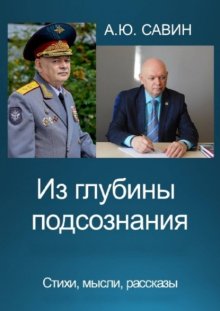
 Reading A. Yu. Savin, "From the depths of the subconscious. Poems, thoughts, stories".


And there these thoughts: 

"- Don't give up what you started. It will still come back, but it will be much harder to fulfill it."

"You mustn't give in to doubts. If you have taken the first step, then go further. Otherwise, you'll be stuck in place all your life."

"Don't take anyone with you on a difficult journey. Cope with difficulties on your own. But share the joy with everyone very generously to avoid envy and ridicule." 

And so, I have finished the work on my paper. Submitted for publication. Probably Reviewers will demand changes... Here it is: arXiv:2401.14217

The explicit form of the unitary representation of the Poincaré group for vector-valued wave functions (massive and massless), with applications to photon's localization and position operators

And now it is time to make the next step. Go further

30-01-24 19:25


Spring is coming soon.... (credits. N.B.)

31-01-24 7:56
The Moon at 7:17 CET  this very morning
Of course the sky is blue
and the Moon is there
even when nobody looks.
Or is it so?

01.02-24 15:46

Reading:


The book reveals one of the most important unresolved issues of natural science — the question of the posthumous existence of man. An easily reproducible experimental method for solving this problem developed by the author is described and its algorithm is described. Information is provided on the phenomena of mediumship, on the use of which the methodology is based, as well as on the underlying phenomena of psychism. The classification of these phenomena is proposed. The information from previous and own studies of posthumous life is summarized, the conclusions that follow from the results obtained are given, and their significance is assessed.

In accordance with the information about the structure of space obtained during the study of the psychic plane of the universe, some basic provisions of modern science are being rethought, and the paradoxes unexplained by it (photometric, gravimetric, nonsense of quantum mechanics ...) and natural phenomena (causes of inertia and gravity, equality of inertial and gravitational masses, and a number of others) are being explained. The topics of future scientific, possibly dissertation research are outlined.

04-02-24 8:15


Nothing is more important!

05-02-24 11:35 Planes, trains and wormholes 

From "Contours of the universe": Ether consists of electric charges. And there are no photons! But no, there are!

And what is "charge?" Geometrodynamics is the answer? Perhaps. But one should not forget hidden dimensions! The boundary is boiling, non-smooth, sponge-like, fractal-like.


Chronogeometry-Geometrodynamics: please come back!

05-02-24 18:21  Working now on preparing a condensed version of "Explicit form..." mentioned in the note above. This time for a physics journal, therefore simplifying and/or avoiding  the math as much as possible.


There (p. 130):

"Enemies are often of more value than friends, inasmuch as they discover our faults and magnify them, hide or ignore our virtues, and by so doing show us clearly the need of improvement. Friends, on the contrary, magnify our virtues and ignore our faults."


Though we need both friends and enemies.

12-02-24 11:35 Finished reading 


Heartbreaking ghost stories. The message there:

Started reading  


There, in the section on Sinology:

... the mind of Heaven is deducible from what is the Will of mankind ! 

... For there are three well-known modes of repelling the attack of new thoughts : firstly, by ignoring them, secondly by denying them, and lastly by asserting that they are not new, but were known long before.

And the end:

... Truth will not change her nature to accommodate "the trade"; Serious philosophy has now really outgrown Universities, where Science stands under State-guardianship. It may however some day perhaps come to be counted among the occult sciences; while the spurious kind, that ancilla theologice in Universities, that inferior counterfeit of Scholasticism, for which the highest criterion of philosophical truth lies in the country catechism, will make our Lecture-halls doubly re-echo. "You, that way : we, this way".

Nowadays it applies to Wikipedia as well. 

13:53 Have finished! Back to photons. And to the contours of the physics of densities by Zaporozhets.

13-02-24 10:32

https://twitter.com/aagiiah/status/1756907626556957005

Natural Intelligence!

!3-02-24 18:20 While ago i received referee  reports of my paper on photons. Two are positive, requiring some revisions and explanations, one is negative, stating flatly that the subject of the paper is not new and not interesting. I have seven days to provide a revised version. It requires a lot of work.

15-02-24 10:07


15-02-24 10:21 

15-02-24 10:38 Steve Patterson - food for thoughts:

No, Chairs Do Not Exist

Coming Around to Platonism


16-02-24 18:10 Working on revisions of the photon paper. One reviewer asked me to provide the proof of Proposition 2. Working on it, and it it so complicated, and I first have to understand my proof in all details!  But when I read the Acknowledgements part in  Peter Lamont's "The First Psychic"


"...When it was all done, I sent the manuscript to my editor, Tim Whiting, who told me to do it all again, but this time to make it interesting. It then went to Steve Guise, who told me to do it one more time,  but this time without the errors."

- when I read that. I feel all bettert not being alone in my misery!

19-02-24 19:24 Have found previously unnoticed errors in my paper. Decided to rewrite it completely getting rid of the cotangent bundle and staying all the time with the tangent bundle. That means major rewriting. Have no idea how long it will take. Perhaps a month. Psi have to wait. All is lessons!

21-02-24 18:02 Finished reading "D.D. Home. His Life. His Mission" by Madame Dunglas Home 

"Again, truly I tell you, that if two of you agree on earth concerning anything that they will ask..."
Matthew 18:19
26.02.24 10:32 You can't explain Psi without taking into account the Hyperdimensional Matrix System


5.3.24 9:54

"In truth, whatever is worth doing at all, is worth doing well; and nothing can be done well without attention."


5.3.24 18:08 

Friday, January 19, 2024

Information is the key - Consciousness is the door

Reading:


A traveling companion

"... I swallowed his compliment with some pleasure and began to blow on the hot tea, annoyed that I could not drink from the saucer, since it was completely flat. The waves of water in the cup running away from my breath made me think that many things in the world are like these waves: metabolic processes are going on, energy is being transferred… And suddenly it dawned on me that information can also be transmitted. Information that preceded everything created by the hand of the Creator and which is the defining condition for the development of the whole world. We often require little effort from ourselves in exchange for a great result. And maybe this requirement, despite its apparent absurdity at first glance, has its own meaning? And if, knowing the formula for the development of the process, you breathe information into it with the appropriate program, then you can get a self-developing system. Maybe that's what the Creator did, intending to build such a gigantic structure as our universe?

I was taken aback by such thoughts. What did I care about the universe, energy, information before? And now suddenly it's gone. And then I began to think seriously."


P.S.1 21-01-24 16:23


Hossenfelder digs herself into a deeper hole

 P.S.2. 21-01-24 16:50

Reading A. Yu. Savin, V.I Antonenko "Foundations of Noocosmology"

"This assumption echoes A.Kohram's thought about the "conscious properties of matter" (See: Cohram A. Relationship between Quantum Physics and Biology//Foundations of Physics.- 1971.- N 3). Apparently, they were also meant by the outstanding American physicist R. Feynman, considering the principle of least action in the quantum mechanical domain.

"In the case of light we also discussed the question: How does the particle find the right path? From the differential point of view, it is easy to understand. Every moment it gets an acceleration and knows only what to do at that instant. But all your instincts on cause and effect go haywire when you say that the particle decides to take the path that is going to give the minimum action. Does it 'smell'  the neighboring paths to find out whether or not they have more action? In the case of light, when we put blocks in the way so that the photons could not test all the paths, we found that they couldn't figure out which way to go, and we had the phenomenon of diffraction. "Is the same thing true in mechanics? Is it true that the particle doesn't just 'take the right path' but that it looks at all the other possible trajectories? And if  by having things in the way, we don't let it look, that we will get an analog of diffraction? The miracle of it all is, of course, that it does just that. That's what the laws of quantum mechanics say. So our principle of least action is  incompletely stated. It isn't that a particle takes the path of least action but that it smells all the paths in the neighborhood and chooses the one that has the least action by a method analogous to the one by which light chose the shortest time. (Feynman, Leighton, Sands,. "Lectures on Physics, Mainly Electromagnetism and Matter", Addison-Wesley 1964, p. 19-9)

Summarizing the statements of scientists, it can be concluded that behind the physically measurable structures of nature, the human spirit sees what is characteristic of itself. By “painting” the world to a logically complete system, he displays his own meaning in a scientific picture that coincides with the essence of the world. Consequently, the model of the surrounding reality displays not only what is opposite to consciousness, but also what is in the outside world, the logical continuation of which consciousness is. In other words, the dynamics of the development of ideas about the world, ultimately as a result, it inevitably leads to the inclusion of the psyche, consciousness in the theoretical construction of the universe."


P.S.3  23-01-24 17:52


Saturday, December 16, 2023

Let there be light

 Have completed my list of publications. It may be useful, as there are links allowing to view each of them.


Probably there are still some mistakes. Will fix it with time. Right now working still on photons. There is nothing more important than LIGHT!


de Holanda, Francisco (1545), "The First Day of Creation", 
De Aetatibus Mundi Imagines.


1  In the beginning God created the heaven and the earth.
2  And the earth was without form, and void; and darkness was upon the face of the deep. And the Spirit of God moved upon the face of the waters.
3  And God said, Let there be light: and there was light.
4  And God saw the light, and it was good; and God divided the light from the darkness.


 P.S.1. 17-12-23 16:20


Christopher A. Fuchs, N. David Mermin, and R¨udiger Schack

"We give an introduction to the QBist interpretation of quantum mechanics. We note that it removes the paradoxes, conundra, and pseudo-problems that have plagued quantum foundations for the past nine decades. 
...
Unlike Copenhagen, QBism explicitly takes the “subjective” or “judgmental” or “personalist” view of probability, 5–9 which, though common among contemporary statisticians and economists, is still rare among physicists: probabilities are assigned to an event by an agent "

I am not buying it. Or better, I give to this interpretation my subjective probability being 100% false and misleading.

P.S.2 17-12-23 16:36


" “Collapse of the state” or “wave function collapse” are popular synonyms for state reduction. The connotation that the transition in (49) is a dramatic dynamical process, as if the physical system were evolving, is clearly misleading. The various mathematical models that, exactly or approximately, accomplish the state reduction (49) as a process in time result from a category mistake: The statistical operator is not a physical object or a property of a physical object, it describes the object by encoding what we know about it, and state reduction is the bookkeeping device for updating the description. An electron carries its mass and charge around, but not “its” statistical operator. It is worth recalling here that different physicists may very well use different, equally correct, statistical operators for predictions about that same electron."

I am not buying it. "what we know about it"? Who are those "we"? And what happens to quantum mechanics (and the whole world with it) when "we" go to sleep?

" Is quantum theory well defined?
– Is the interpretation of quantum theory clear?
– Is quantum theory local?
– Is quantum evolution reversible?
– Do wave functions collapse?
– Is there instant action at a distance?
– Where is Heisenberg’s cut?
– Is Schrodinger’s cat half dead and half alive?
– Is there a “measurement problem”?

...
– Yes, quantum theory well defined.
– Yes, quantum theory has a clear interpretation.
– Yes, quantum theory is a local theory.
– No, quantum evolution is not reversible.
– No, wave functions do not collapse; you reduce your state.
– No, there is no instant action at a distance.
– Heisenberg’s cut is where you put it.
– No, Schr¨odinger’s cat is not half dead and half alive.
– No, there is no “measurement problem.”"

"you reduce your state" What a nonsense! Shameless propaganda!

P.S.3. 16-12-23 19:24


"Since Whitehead's metaphysics described a universe in which all entities experience, he needed a new way of describing perception that was not limited to living, self-conscious beings. The term he coined was "prehension," which comes from the Latin prehensio, meaning "to seize".[111] The term is meant to indicate a kind of perception that can be conscious or unconscious, applying to people as well as electrons."

I like Whitehead! Have to study his ideas!

P.S.4 18-12-23 11:41

Whitehead on God:

Alfred North Whitehead


"God is that function in the world by reason of which our purposes are directed to ends which in our own consciousness are impartial as to our own interests. He is that element in life in virtue of which judgment stretches beyond facts of existence to values of existence. He is that element in virtue of which our purposes extend beyond values for ourselves to values for others. He is that element in virtue of which the attainment of such a value for others transforms itself into value for ourselves.
He is the binding element in the world. The consciousness which is individual in us, is universal in him: the love which is partial in us is all-embracing in him. Apart from him there could be no world, because there could be no adjustment of individuality.  (...)"

P.S.5 19-12-23 8:47


Beethoven felt the Napoleonic Wars reaching Vienna in early 1809 and completed writing the piano concerto in April while Vienna was under siege by Napoleon's armies. He wrote to his publisher in July 1809 that there was "nothing but drums, cannons, men, misery of all sorts" around him. To save his hearing, he fled to his brother's cellar and covered his ears with pillows.

P.S.6 19-12-23 9:11


"Discipline means taking the hard road—the uphill road.

To do what is right.

For you and for others.

...

Where does the switch come from? The overdrive. The berserker mode. The full-on destroyer that will not stop?

I think this is something that is learned.

And it is a hard lesson and not everyone gets it.

And it is an important lesson.

A critical one.

It is the thing that allows you to go the extra distance.

To dig a little deeper.

To push a little harder.

To get after it.

And it actually takes two opposing forces to bring it to life.

It takes both emotion and logic to reach your maximum potential, to really give everything you have, to go beyond your limits.

Because emotion and logic will both reach their limitations.

And when one fails, you need to rely on the other.

When it just doesn’t make any logical sense to go on, that’s when you use your emotion, your anger, your frustration, your fear, to push further, to push you to say one thing: I don’t stop.

When your feelings are screaming that you have had enough, when you think you are going to break emotionally, override that emotion with concrete logic and willpower that says one thing: I don’t stop.

Fight weak emotions with the power of logic; fight the weakness of logic with the power of emotion.

And in the balance of those two, you will find the strength and the tenacity and the guts to say to yourself:

I. DON’T. STOP.
UNTIL THE END


Discipline Equals Freedom: Field Manual
Jocko Willink


P.S.7. 23-12-23 12:54 Still fighting with photons. Finally happy with the list of publications. It looks now relatively tidy.

P.S.8. 24-12-23 16:38

Miracle happened just while ago! My beloved Bessel function state on a circle came out from photon's position operator with commuting components! Can't believe. I secretly hoped that it will be so, but probability that this is indeed the case I estimated to be  truly ZERO. And yet!


Merry Christmas


 Now I need to write it all down. Deadline December 31.


P.S.9 25-12-23 11:58 Persevere


"The wind of God’s grace is always blowing, but you must raise your sail."
—Vivekananda, Hindu philosopher

P.S.10 26-12-23 12:21


    1. "Wherever we look in nature, our own reflection comes staring back at us.
    2. The mind can’t be directly observed—only described by analogy.
    3. What happens in our fields and gardens happens within us, too.
    4. Thoughts, attitudes, emotions, and morals are contagious.
    5. Knowledge squared is wisdom, and wisdom squared is virtue.
    6. Somewhere, sometime, we have played this game of life before.
    7. Nature is saturated with divinity; each particle carries the power of the universe.
    8. As children of the universe, we are all born creators.
    9. All of nature is a metaphor of mind.
    10. The world is fundamentally mental.
P.S.11. 27-12-23 8:02

And so my list of publications is now "official"


I would like to publish in a Russian math journal. I have already published in a French journal and in a German journal, but not in a top class Russian journal.

P.S.12 29-11-23 10:08

"Light, then, consists in the vibrating motion of a medium, which must, of course, fill all space. This is called the ether.

In the fact that the theory of a cosmic ether explains fully all the phenomena of radiation, refraction, diffraction and polarization of light is the strongest argument in favour of the theory.

Of late, gravitation, molecular action, magnetic, electric, and electro dynamic attractions and repulsions have thus been explained.

 Sensible and latent heat, electricity and magnetism themselves have been of late almost satisfactorily explained by the theory of the all pervading ether. "

... 

"Kant’s great achievement was the discovery that ‘time, space and causation are modes of thought’, but Vedânta taught this ages ago and called it Mâyâ. Schopenhauer stands on reason only and rationalizes the Vedas . . . Sankara maintained the orthodoxy of the Vedas. "


—Vivekananda, Hindu philosopher 

 Interesting, but I do not necessarily completely agree with all of the above.

30-12-23 14:25

James Allen

"He never wrote theories, or for the sake of writing; but he wrote when he had a message, and it became a message only when he had lived it out in his own life, and knew that it was good. Thus he wrote facts, which he had proven by practice." 

Foundation Stones to Happiness and Success  

01-01-24 15-11  Happy New Year 2024!

"In  all  forms  of  progress,  avoidance  of  the  bad  always  precedes 
acceptance and knowledge of the good, just as a child at school learns to 
do  its  lessons  right  by  having  repeatedly  pointed  out  to  it  how  it  has 
done them wrong. If one does not know what is wrong and how to avoid 
it, how can he know what is right and how to practice it? Bad, or untrue, 
actions  are  those  that  spring  from  a  consideration  of  one’s  own 
happiness only, and ignore the happiness of others, that arise in violent 
disturbances  of  the  mind  and  unlawful  desires,  or  that  call  for 
concealment in order to avoid undesirable complications. Good or true 
actions are those that spring from a consideration for others, that arise in 
calm reason and harmonious thought framed on moral principles or that 
will not involve the doer in shameful consequences if brought into the 
full light of day. "

James Allen, Foundation Stones to Happiness and Success  


02-01-24 11:44 On Christmas Eve I wrote: " Now I need to write it all down. Deadline December 31." 
Today we have January 2nd, the deadline has passed, and I am still "writing it all down". 

To write it all in a crystal-clear way - that is my aim. 

But to write it down in a crystal-clear way, first I must have it all crystal-clear in my head. And that is quite a task! Working on it.

And yes, I know, there is a danger....


06-01-24 10:58

"Тебя не было – и этого дела не было. Ты появился – и оно появилось."

"You didn't exist and this case didn't exist. You showed up and it showed up." 


09-01-24 9:27

Order out of chaos - colinearity


"Wisdom is a mind filled with love, and in such a mind there is no room for the devil! Only one obstacle exists on the way to a happy human life - it is our laziness in striving to know the world around us!"


11-01-24 11:55

"... we have a very unhealthy habit of making the product - our intended result - the goal, instead of the process of getting there.  This is evident in so many activities in our everyday life.  We become fixated on our intended goal and completely miss out on the joy present in the process of achieving it. We erroneously think that there is a magical point that we are going to get to and then we will be happy. We look at the process of getting there as almost a necessary nuisance we have to go through in order to get to our goal."

 14-01-24 12:57 Reading now:


Question 150 : Is time multidimensional?

Answer : For evolving entities, such as humans, obviously yes.

Question 151 : Why is it impossible to get information about the nature of time?

Answer : It is a mystery behind seven seals. It is dangerous for man to be allowed to play with time. He is selfish, resourceful and can bring harm to others. His development is not yet sufficient to acquire such information.


Biolocation

  On Tuesday, December 23, Vlad Zhigalov (see e.g. here ) had a talk at the " Temporology " seminar hosted at Omsk.  He spoke abo...